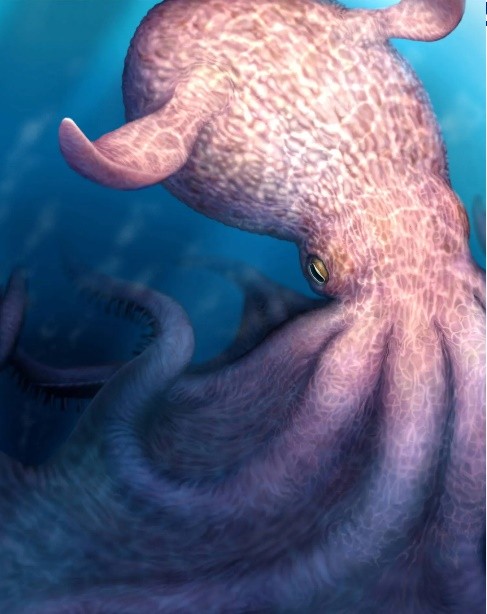
The “Kraken” Hypothesis in Paleobiology: Evaluating the Role of Giant Octopods in Reconstructing Cretaceous Deep-Sea Ecosystems
DOI:
https://doi.org/10.64474/3139-1559.Vol2.Issue1.6Keywords:
Kraken hypothesis, Paleobiology, Giant octopods, Cephalopod evolution, Marine paleoecology.Abstract
The current paper analyzes the hypothesis "the Kraken", referring to the potential presence of huge octopus-like cephalopods in the deep sea environment during the Late Cretaceous period. This research involves information from paleontological, marine paleoecological, evolutional, taphonomical, and behavioral aspects concerning the possible occurrence of large cephalopods within ancient oceans. The results showed that cephalopods could be considered highly adaptive aquatic animals with well-developed senses and behaviors including camouflage and hunting specialization and that, therefore, they could play an essential role within marine ecosystems of the Mesozoic era. Additionally, this research focuses on unusual ichthyosaur assemblages and the impact of preservation biases and geological processes within their study. The comparative analysis of the behavior and features of modern octopuses and squids proves the biological plausibility of cephalopod gigantism and complexity. Despite the absence of any fossil record, it can be concluded that this theory provides important information for future research related to cephalopod evolution and ancient marine paleobiology.