Next-Generation Nano medicine in Oncology: Multi-Cancer Insights into AI-Guided Precision Therapies
DOI:
https://doi.org/10.64474/3139-1559.Vol1.Issue1.3Keywords:
cancer nanomedicine; precision oncology; multi-omics; artificial intelligence; hepatocellular carcinoma; breast cancer; renal cell carcinoma; glioblastomaAbstract
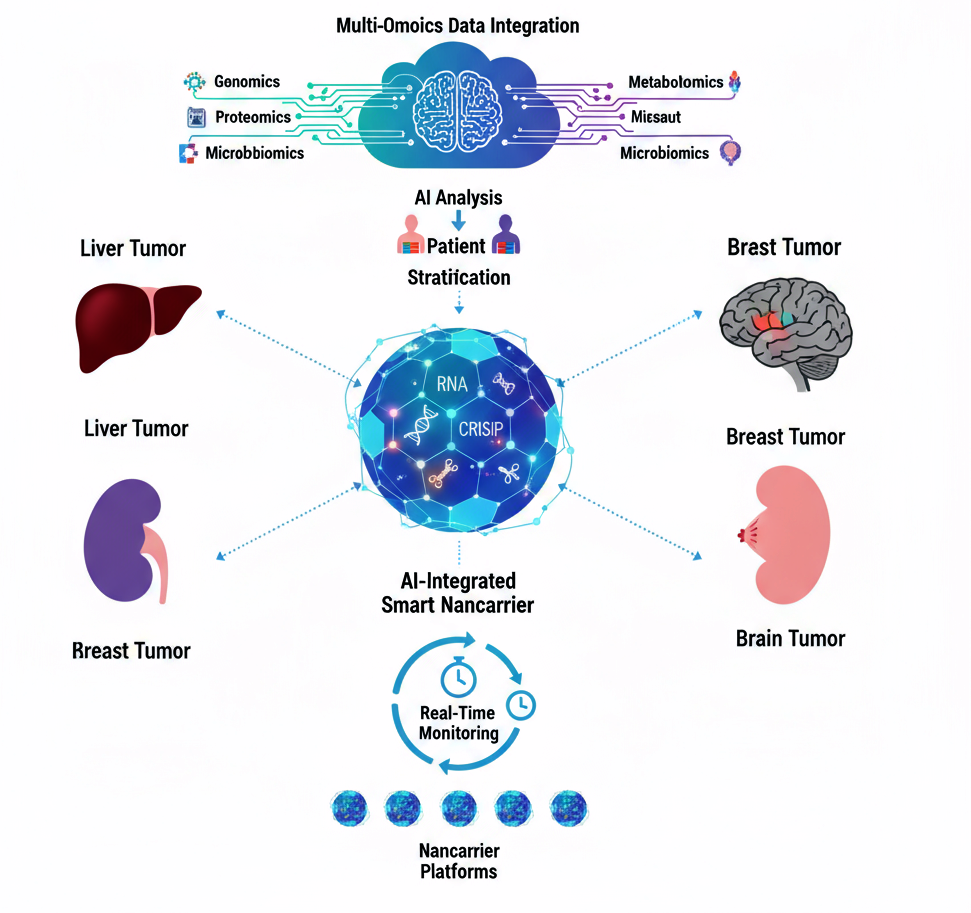
Background: Cancer therapy continues to face major challenges due to systemic toxicity, therapeutic resistance, and tumor heterogeneity, underscoring the need for innovative treatment paradigms. Objective: This review examines advances between 2019 and 2024 in artificial intelligence (AI)–integrated nanomedicine for multi-cancer applications, with a focus on liver, breast, renal, and brain tumors. Methods: A comprehensive analysis of recent literature was performed, covering nanocarrier innovations, AI-driven biomarker discovery, omics-based integration, and outcomes from preclinical and clinical studies. Results: Smart nanocarriers demonstrated significant promise across tumor types: ASGPR- and GPC3-targeted formulations in hepatocellular carcinoma, subtype-specific nanotherapies in breast cancer, VEGF- and tyrosine kinase inhibitor–loaded nanoparticles in renal cell carcinoma, and blood–brain barrier–penetrating systems for glioblastoma. AI models played a pivotal role in enhancing patient stratification, predicting therapeutic responses, and guiding the rational design of nanocarriers with improved pharmacokinetics and tumor penetration.Conclusion: AI-guided nanomedicine is emerging as a disruptive frontier in oncology, offering precision, personalization, and enhanced translational potential across diverse tumor landscapes.